
Fowler College of Business
DIGITAL INNOVATION LAB
where we do not compromise humanization for digitalization
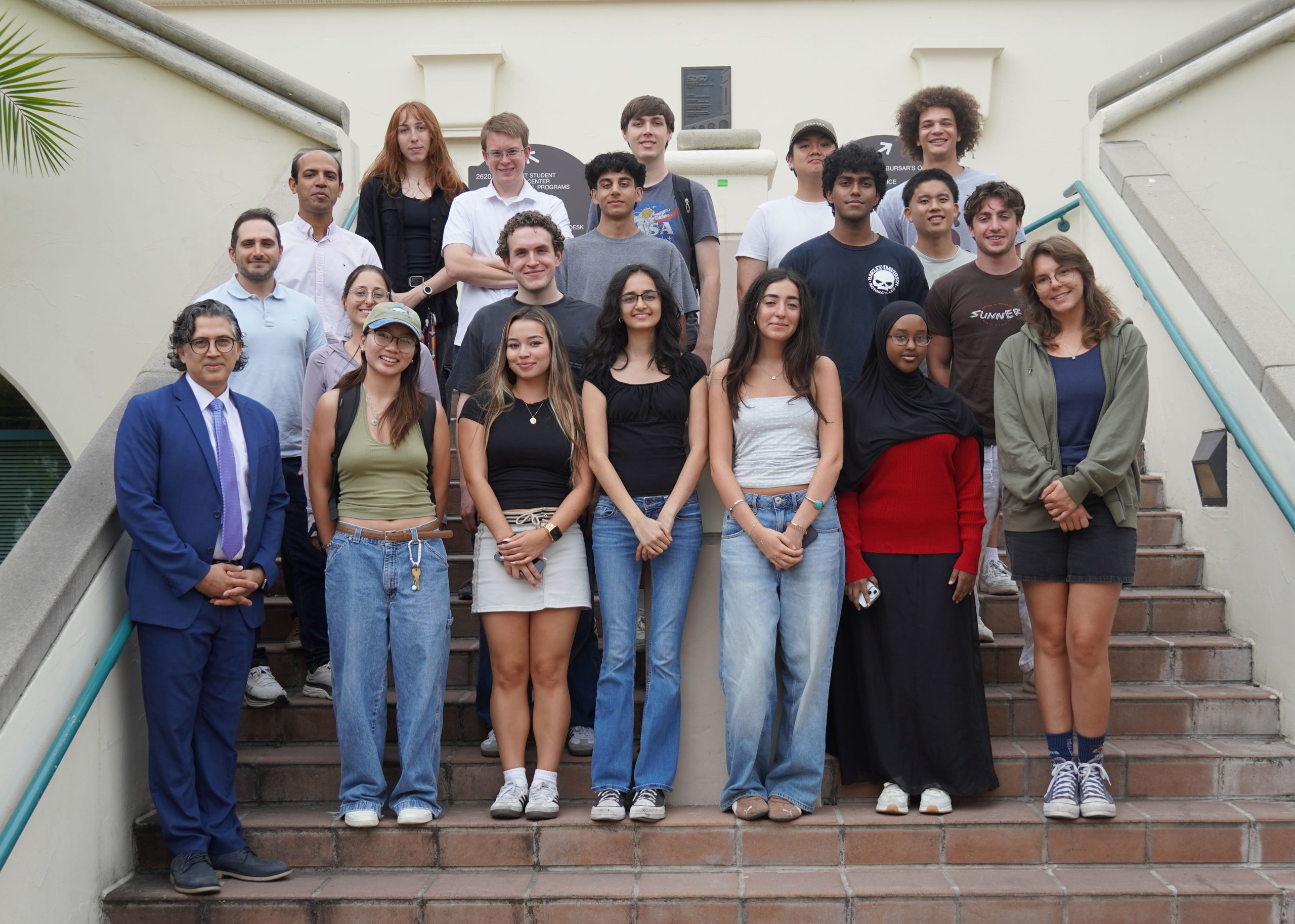
With a relentless focus on studying, adopting, and implementing new technologies, we propel organizations forward in the digital era. Our four innovative studios set the stage: DIVE Studio pioneers research-driven exploration, IDEA Studio excels in product development prowess, LEAD Studio empowers through entrepreneurial education, and PATH Studio provides transformative consultancy. Together, we lead the way in guiding organizations to navigate the dynamic digital landscape with human-centric strategies. Join us at DiLab and embark on a transformative journey toward digital success.
Digital Innovation Research
DIVE Studio
(Digital Innovation and Visionary Exploration)
New Product Development
IDEA Studio
(Innovation, Development, Engineering, and Adaptation)
Digital Entrepreneurship Academy
LEAD Studio
(Learning Entrepreneurship and Digital Development)
Digital Transformation Consultancy
PATH Studio
(Pioneering Adaptation through Transformation and Holism)

Digital Innovation Lab (DiLab) Mission
Digital Innovation Research
Reforming Digital Education
We study theories such as connectivism and networked learning and develop learning platforms and technologies to support innovation-based and authentic learning. Our research contributes to inclusive education and alternative models of education as the foundations of education reform.
Democratizing Digital Innovation
We study how companies develop strategies, allocate resources, and engage their employees, customers, and community in digital innovation initiatives. We study open digital innovation, research innovation culture, and its support systems, and examine the role of social computing and social technologies democratizing new product or service development across the industry.
Accelerating Digital Entrepreneurship
We study how digital entrepreneurs can systematically expand their competencies to adapt and address new challenges. We explore concepts such as digital literacy and digital entrepreneurial mindset and their roles in driving digital entrepreneurship with an emphasis on accessible support systems.
Humanizing Digital Transformation
We focus on redefining the strategic role of IT from a human-centered perspective and its future technological ambition in different areas from design to business development. We also study the role of employees, their experiences and culture in digital transformation, its governance, and actualizing its values.
We strive to develop human-centered approaches to the design, adoption, and dissemination of digital technologies and nurture compassionate digital transformation leaders.
Students Trained
Talks and Publications
Research Projects
Consultant Trained
Majors Participated
Digital Innovation Research
Selected Projects
Responsible AI
1. Responsible AI Design: Authenticity, Control, and Transparency in Intelligent Systems
2. Inclusive Intelligence: Designing AI Systems for Diverse Human Needs
3. AI-Enabled Support Systems for Neurodivergent Professionals
4. Neurodiversity Support Infrastructures for the Future of Work
5. AI-Enabled Career Coaching for Neurodivergent Talent
6. Intelligence Assurance: Trust, Governance, and Accountability in AI Systems
7. Polycentric Assurance for AI-Assisted Work and Innovation
8. AI Companions and Human Development: Designing Ethical Human–AI Relationships
9. Digital Embodied and Extended Presence (DEEP): Human Cognition in Agentic AI Systems
10. Augmented Cognitive Extension: How Generative AI Changes Human Thinking
11. Human-Centered Generative AI for Coaching, Guidance, and Support
12. Training Socially Intelligent Robots for Human-Centered Interaction
Digital Transformation
1. Human–AI Collaboration and the Transformation of Work
2. Experiential Values of Work in Digital Transformation
3. Emotion, Engagement, and Well-Being in Digitized Workplaces
4. Co-Governance in Digital Transformation: Culture, Participation, and Trust
5. Building Data Literacy Pathways in Public Institutions
6. Self-Service Analytics and Employee Empowerment in Data-Driven Organizations
7. Cybersecurity Readiness and Behavioral Responsibility in Digital Organizations
8. Inclusive Digital Transformation: From Accessibility to Organizational Inclusion
9. Customer Experience Management Systems in the Digital Economy
10. Service Failure and Recovery in Platform-Based and Sharing Economies
Digital Innovation
1. Human–AI Co-Creation and Innovation in the Age of Generative AI
2. Responsible Innovation and Governance of Generative AI Systems
3. Open Innovation Organizational Forms and Ecosystem Structures
4. Open Innovation Platform Design and User Experience
5. Social Product Development: Platforms, Processes, and Governance
6. Enterprise Social Networking Platforms and Innovation Productivity
7. Digital Innovation in SMEs: Employee Engagement and Innovation Capacity
8. Extended Reality Applications for Professional and Creative Practice
9. Smart Sensor Technologies and Digital Innovation in Architecture
10. Designing Social Platforms for Collaborative Digital Services
Digital Entrepreneurship
1. Digital Entrepreneurial Mindset and Opportunity Creation in Platform Economies
2. AI-Enabled Mentorship Systems for Digital Entrepreneurship Education
3. Digital Intrapreneurship and Innovation Culture in Organizations
Digital Education
1. AI-Enhanced Experiential Learning for the Next Generation of Digital Leaders
2. Inclusive Learning Systems and the Authentic Social Learning Model
3. The Future of Higher Education: From Connectivism to Education Value Networks
4. Virtual and Extended Reality Applications for Learning
5. Digital Mindfulness and Responsible Technology Use in Education
Recent Publications
2026
Abhari, K., Safaei Pour, M., & Shirazi, H. (2026). Cybersecurity training governance: The SEAL framework for sustained readiness. Business Horizons.
Elkins, A., Singh, S., Pourebadi, M., Amadasun, U., Chadha, A., & Abhari, K. (2026). Designing socially grounded data pipelines for training and operating socially intelligent robots: Challenges and future directions.*
Abhari, K., Safaei Pour, M., & Sanatizadeh, A. (2026). Augmentation innovation paradox: Rethinking validation in generative AI-driven open innovation.
Abhari, K., Lahiri, M., & Paila, S. (2026). Governing generative AI use through FAIR user experience: Designing for interactional integrity.
Safaei Pour, M., Abhari, K., & Fathi, F. (2026). Polycentric generative-assurance theory: Toward adaptive governance in generative AI-augmented software assurance.
Xiao, B., Abhari, K., Winter, J., & Tan, C. W. (2026). Introduction to the minitrack on responsible AI governance for connected intelligence.
2025
Abhari, K., & Robinson, K. (2025). Inclusive intelligence: AI strategies for neurodivergent talent. Strategic HR Review.
Abhari, K. (2025). Employee participation in digital transformation: From digitalization sentiment to transformation predisposition. Information & Management.
Abhari, K. (2025). The clinical problematization approach in information systems research.
Abhari, K., Rivera, A., & Xiao, B. S. (2025). Responsible artificial intelligence design: A Sartrean blueprint for navigating the ethical complexity of future AI research.
Elkins, A., Singh, S., Pourebadi, M., Amadasun, U., & Abhari, K. (2025). Training socially intelligent robots with large behavioral models: Challenges, strategies, and future research opportunities.*
Rivera, A., & Abhari, K., & Xiao, B. S. (2025). Responsible AI infrastructure design: Introducing agentic self-governance.
Thomson, M., & Abhari, K. (2025). Designing AI coaches: A case study on augmented romantic intelligence for navigating workplace relationships.
Abhari, K., & Safaei Pour, M. (2025). Digital embodied and extended presence (DEEP) in generative AI use.
Abhari, K., & Segal, R. (2025). Designing AI companions: A Sartrean framework for human-centered systems.
Abhari, K., & Davidson, E. (2025). Open innovation organizational forms: Structuring and strategizing open innovation goals and activities. Academy of Management Proceedings.
Abhari, K., Safaei Pour, M., & Sanatizadeh, A. (2025). Toward a theory of augmented innovation: Navigating the nuances and trade-offs in open innovation.
Rivera, A., Abhari, K., & Xiao, B. (2025). Responsible AI design: The authenticity, control, transparency theory. Journal of the Association for Information Systems, 26(5), 1337–1389.*
Rad, P., Jozani, M., Zanella, G., Safaei Pour, M., & Abhari, K. (2025). Reimagining the sharing economy through blockchain: The case of Helium’s decentralized wireless network. In Proceedings of the 58th Hawaii International Conference on System Sciences (pp. 5631–5640).
2024
Abhari, K., Safaei Pour, M., & Shirazi, H. (2024). How to design a better cybersecurity readiness program. MIS Quarterly Executive.
Shirazi, H., Bakhtiari, H., & Ghasemian Sahebi, I. (2024). Role of Trust and Commitment on Sustainable Supply Chain Performance Through the Mediation of Supply Flexibility (Case Study: Petrochemical Industry). Research in Production and Operations Management.
Abhari, M. B., Sabetrohani, H., Larijani, S. S., Ghafori, R., & Nafei, A. (2024). Social Determinants of Women’s Reproductive Health: A Systematic Review. Health Scope, 13(1).
Abhari, M., Tavakolinia, J., & Boochani, M. H. (2024). Analyzing the factors affecting the distribution of urban services in urban plans (case study: Tehran). Sustainable Development of Geographical Environment.
2023
MEHRABI, M., Shirazi, H., Tajzadeh Namin, A. A., & Jannatifar, H. (2023). Identifying and prioritizing factors for the implementation of blockchain technology in the development of the tourism industry in Tehran province. Journal of Tourism and Development.
Ghatak, C., Jabeen, S., Shirazi, H., & Ray, I. Improving the Resiliency of Embedded Networks in Heavy Vehicles-Towards Fault Tolerance.
Souri, S., Ghaffari, M., Shirazi, H., & Hosseini, S. H. K. (2023). Validation of Brand Citizenship Behavior Development Model in Medical Tourism Employees. Quarterly Journal of Management Strategies in Health System.
Xiao, B., Tan, C. W., & Abhari, K. (2024). Introduction to the Minitrack on Responsible Innovation in Collaborative, Connected, and Intelligent Systems: Design, Implementation, and Governance.
Zarghami, S., Kaleji, L. K., & Abhari, M. (2023). Resilience analysis of the local communities from a political economy perspective in Zanjan, Iran. Scientific Reports, 13(1), 19433.
Mucha, T., Ma, S., & Abhari, K. (2023). Riding a bicycle while building its wheels: the process of machine learning-based capability development and IT-business alignment practices. Internet Research, 33(7), 168-205. http://doi.org/10.1108/INTR-10-2022-0769*
Abhari, K., Bhullar, A., Le, J. and Sufi, N. (2023), “Advancing employee experience management (EXM) platforms”, Strategic HR Review, Vol. 22 No. 3, pp. 102-107. https://doi.org/10.1108/SHR-04-2023-0021
2022
Abhari, K., Zarei, M., Parsons, M., & Estell, P. (2023). Open Innovation Starts from Home: The Potential of Enterprise Social Media (ESM) in Nurturing Employee Innovation. Internet Research.
Abhari, K., Davidson, E. J., & Xiao, B. (2022). Inventing Together: The Role of Actor Goals and Platform Affordances in Open Innovation. Journal of the Association of Information Systems. https://doi.org/10.17705/1jais.00716 *
Abhari, K., & McGuckin, S. (2022). Limiting factors of open innovation organizations: A case of social product development and research agenda. Technovation, 102526. https://doi.org/10.1016/j.technovation.2022.102526
Abhari, K., & Vaghefi, I. (2022). Screen Time and Productivity: An Extension of Goal-Setting Theory to Explain Optimum Smartphone Use. AIS Transactions on Human-Computer Interaction. *
Abhari, K., Davidson, E., & Xiao, B. (2022). Modeling Social Product Development Process, Technology, and Governance. IEEE Transactions on Engineering Management. https://doi.org/10.1109/TEM.2020.2973234 *
Ortiz Sandoval, I.D., Tehiva, T., Parsons, M., Abhari, K. (2021). Digital Intrapreneurship: A Work Climate Perspective. In: Stephanidis, C., et al. HCI International 2021 – Late Breaking Papers: HCI Applications in Health, Transport, and Industry. HCII 2021. Lecture Notes in Computer Science(), vol 13097. Springer, Cham. https://doi.org/10.1007/978-3-030-90966-6_40
Mucha, T. M., Ma, S., & Abhari, K. (2022). Beyond MLOps: The Lifecycle of Machine Learning-based Solutions. https://aisel.aisnet.org/amcis2022/sig_adit/sig_adit/9 *
Abhari, K., Davis, D., Ness, H., Pagador, J., Parsons, M., & Brodskiy, R. (2022). Data Swagger: A Systemic Approach to Train, Motivate and Engage Data Savvy Employees. https://doi.org/10.24251/HICSS.2022.742
Dagoc, F., Abhari, K., Roy, V., & Nobis, E. (2022). Entrepreneurship Education Platform Design: The Relationships between Autodidactic Affordances and Experiential Learning Needs. 1, 17. https://doi.org/10.24251/HICSS.2022.003
Roy, V., Nobis, E., Abhari, K., Dagoc, F., & Parsons, M. (2022). Open Innovation Platform Design: The Case of Social Product Development. https://doi.org/10.24251/HICSS.2022.059
Klase, M., Connors, O., & Abhari, K. (2022). Reflectiveness: The Missing Link between Digital Mindfulness and Mindful Use of Digital Technology. https://aisel.aisnet.org/treos_icis2021/19
Mucha, T. M., Ma, S., & Abhari, K. (2022). Sustainability of Machine Learning-based Solutions: A Lifecycle Perspective. https://aisel.aisnet.org/pacis2022/262 *
Su, N., Mcguckin, S., & Abhari, K. (2022). The Limits of Open Innovation: A Literature Review and Research Agenda. https://doi.org/10.24251/HICSS.2022.686
2021
Abhari, K., Ly, J., Sanavi, A., & Wright, M. (2021). ‘Employees First’: The Relationship between Employee Experience Management Systems and Customer Experience Management.. https://aisel.aisnet.org/amcis2021/strategic_is/strategic_is/18
Estell, P., Davidson, E., & Abhari, K. (2021). Affording Employee Voice: How Enterprise Social Networking Sites (ESNS) Create New Pathways for Employee Expression. 2750. https://doi.org/10.24251/HICSS.2021.336
Rice, R., Abhari, K., & Pesavento, M. (2021). An Authentic Social Learning Model to Improve Collaboration and Engagement in Online and Hybrid K-12 Classrooms. https://aisel.aisnet.org/amcis2021/is_education/sig_education/9
Abhari, K., Ostroff, C., Barcellos, B., & Williams, D. (2021). Co-Governance in Digital Transformation Initiatives: The Roles of Digital Culture and Employee Experience. https://doi.org/10.24251/hicss.2021.704
Abhari, K., Ascue, N., Boer, C., Sahoo, C., & Zarei, M. (2021). Enterprise Social Network Applications: Enhancing and Driving Innovation Culture and Productivity Through Digital Technologies. https://doi.org/10.24251/hicss.2021.089
Sosa, L., Abhari, K., Pesavento, M., Koobchehr, F., Xiao, B., Kohsuwan, P., & Olivares, F. (2021). Service Failure Recovery in the Sharing Economy: A Case Study of Airbnb. https://doi.org/10.24251/hicss.2021.099
* Collaborative Projects
Services for Businesses and Communities
Working with local businesses and incubators to foster a culture of human-centered digital technologies UI/UX ServicesConsultancy ServicesDigital Innovation Internship for Undergraduates
A Collaborative Learning Experience with SDSU's DiLab through General Studies 200 & 400 Learn MoreGet Involved
Forms
Contact
Kaveh Abhari, Ph.D. | Faculty Director
Office: SSW 2661 and 2665 | email: kabhari@sdsu.edu | Phone: 619 594-0746